
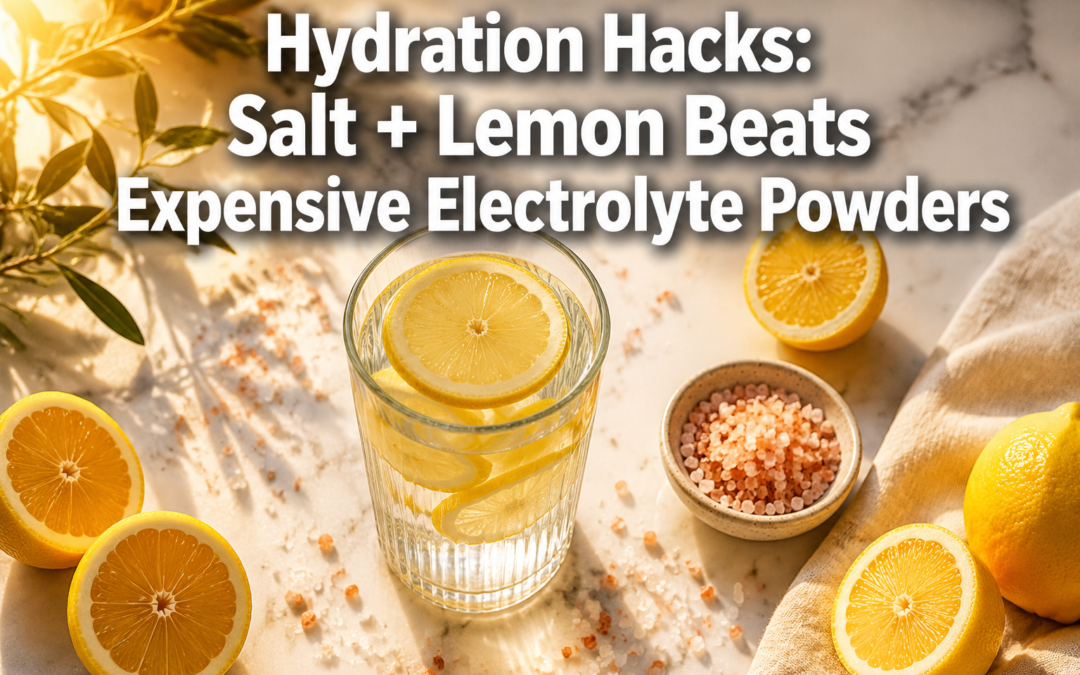
The average American spends over $300 per year on electrolyte powders and sports drinks — most of which contain artificial dyes, added sugars, and ingredients that are harder to pronounce than they are to absorb. Meanwhile, a glass of water with a squeeze of lemon and a pinch of sea salt costs less than five cents and does the job just as well for most people. These hydration hacks — specifically, why adding a pinch of sea salt and lemon to your water is 10x better than expensive “electrolyte” powders for everyday use — deserve a serious look. The science is surprisingly straightforward, and the savings are real.
Key Takeaways 📌
- Plain water alone doesn’t fully hydrate your cells — electrolytes are required for proper fluid absorption
- Sea salt + lemon together provide sodium, potassium, magnesium, and calcium naturally [2]
- Unrefined sea salt (Celtic, Himalayan, Real Salt) contains far more beneficial minerals than table salt [2]
- For daily hydration, the DIY combo beats expensive powders on cost, cleanliness, and simplicity
- Intense athletes may still benefit from concentrated electrolyte powders during heavy training [3]
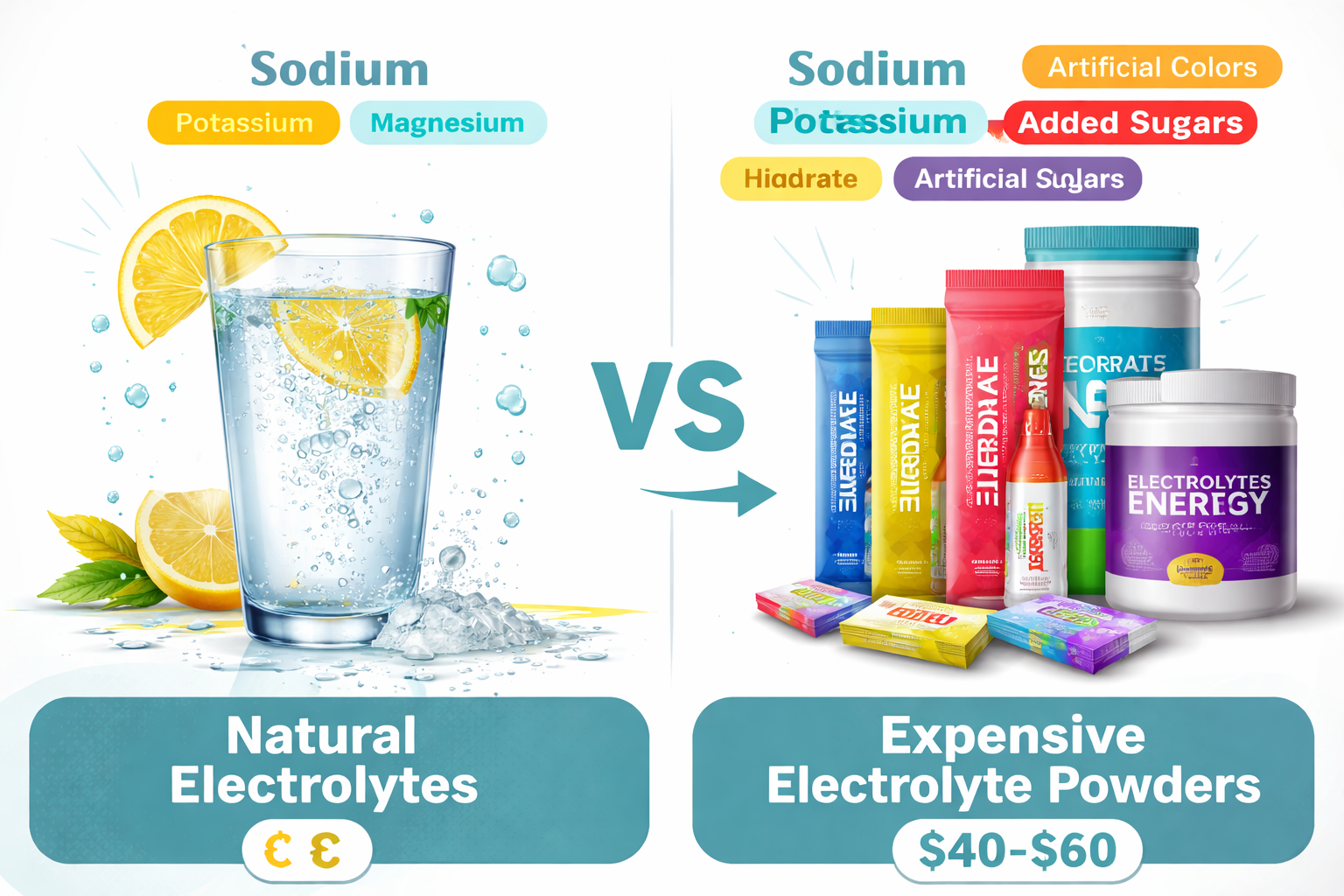
Why Plain Water Isn’t Enough (And What Electrolytes Actually Do)
Here’s something most people never learn in school: drinking plain water doesn’t automatically hydrate your cells. The body needs electrolytes — electrically charged minerals — to move water across cell membranes and keep it there [2]. Without them, water passes through the system quickly without being fully absorbed.
Electrolytes include:
| Electrolyte | Role in the Body |
|---|---|
| Sodium | Regulates fluid balance, nerve signals |
| Potassium | Muscle function, heart rhythm |
| Magnesium | Energy production, muscle recovery |
| Calcium | Bone health, nerve transmission |
The good news? A pinch of quality sea salt and a squeeze of fresh lemon deliver all four of these in their natural, bioavailable form [2].
💬 “Despite the common misconception that salt causes dehydration, minerals in salt function as electrolytes that enable proper cell hydration — when consumed in measured amounts.” [1]
The Problem With Expensive Electrolyte Powders
Walk into any supplement store in 2026 and you’ll see shelves lined with brightly colored electrolyte packets priced at $1.50 to $3.00 each. Many of these products contain:
- ❌ Artificial colors (Red 40, Blue 1)
- ❌ Added sugars or high-fructose corn syrup
- ❌ Synthetic sweeteners like sucralose or acesulfame potassium
- ❌ Anti-caking agents and fillers
For general daily hydration during moderate activity, these extras are completely unnecessary [2]. The body doesn’t need a neon-blue drink to stay hydrated — it needs minerals.
The Science Behind Sea Salt and Lemon as Natural Hydration Hacks
The combination of sea salt and lemon works because each ingredient brings something the other lacks, creating a complementary electrolyte profile that mirrors what the body actually uses [1].
What Sea Salt Brings to the Glass 🧂
Not all salt is created equal. Refined table salt is stripped of its natural mineral content during processing and often contains anti-caking agents. Unrefined options like Celtic sea salt, pink Himalayan salt, and Real Salt retain trace minerals including magnesium, potassium, and calcium alongside sodium [2].
These trace minerals are the difference between salt that simply adds flavor and salt that actively supports hydration at the cellular level.
What Lemon Brings to the Glass 🍋
Fresh lemon juice contributes calcium and potassium — two electrolytes that balance sodium’s effects and help regulate fluid levels in the body [1]. Lemon also provides vitamin C and supports a healthy digestive pH, making the drink easier on the gut.
It’s worth being honest here: one lemon contains only about 17 mg of calcium and 1.3 mg of sodium [3]. That’s a modest contribution. But combined with sea salt’s mineral profile, the two ingredients create a synergy that goes beyond what either delivers alone.
Why Room Temperature Water Matters 🌡️
One often-overlooked detail: room temperature or lukewarm water allows electrolytes to dissolve more completely and may support faster absorption compared to ice-cold water, which can slow digestion [2]. This is a small but meaningful upgrade to the basic recipe.
The DIY Electrolyte Recipe (And How to Upgrade It)
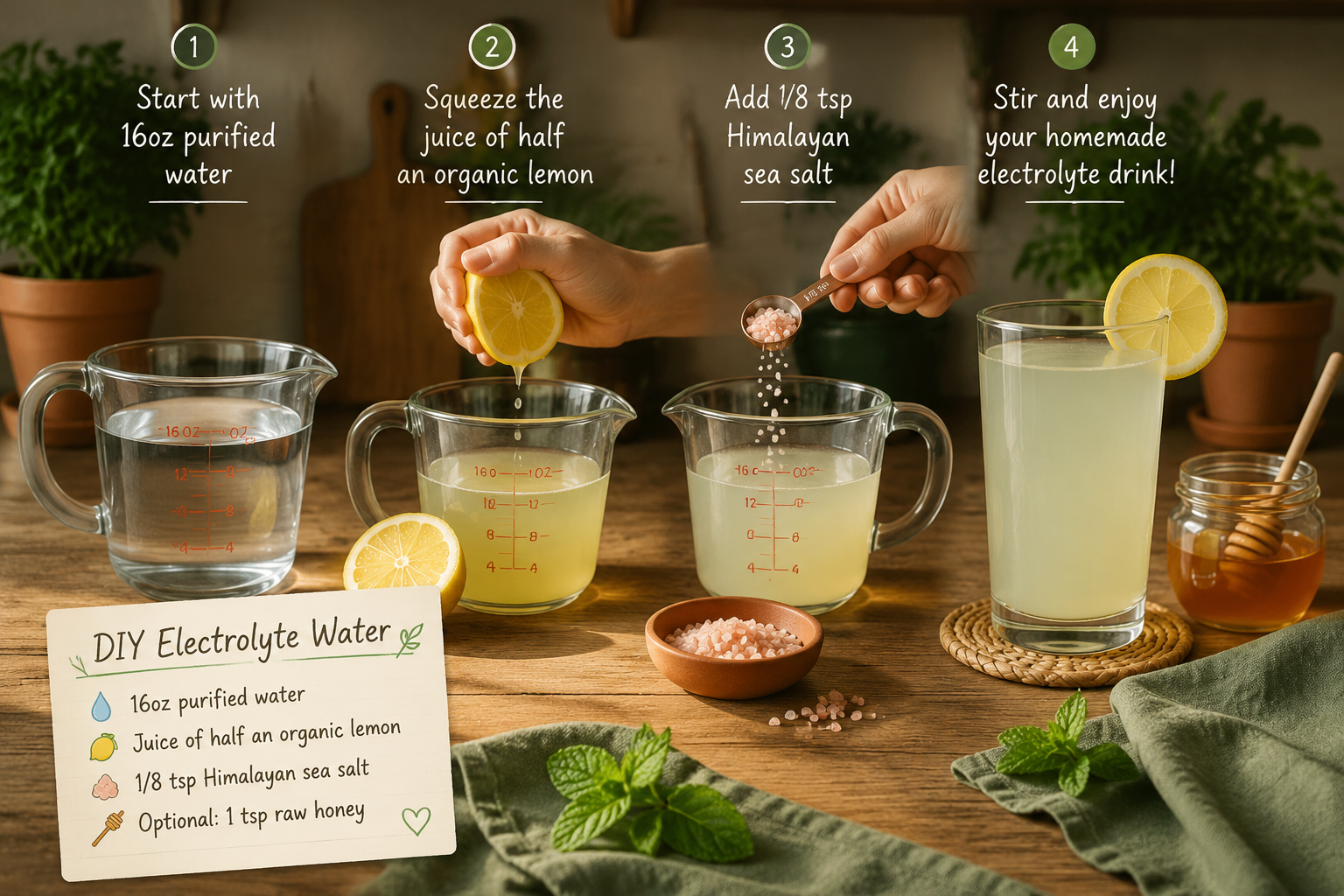
Basic Daily Hydration Recipe
This formula is simple, affordable, and effective for most people on a typical day [2]:
🥤 Basic Sea Salt Lemon Water
- 12–16 oz purified, room-temperature water
- Juice from ½ fresh organic lemon
- ⅛ to ¼ tsp unrefined sea salt (adjust to taste)
Mix, sip, and feel the difference within minutes.
Enhanced Electrolyte Recipe
For more active days, warmer weather, or post-workout recovery, this upgraded version adds extra electrolyte support [4]:
⚡ Enhanced DIY Electrolyte Drink
- 16 oz purified water
- Juice from ½ fresh lemon
- ⅛ tsp pink Himalayan or Celtic sea salt
- 1 tsp raw honey or maple syrup (natural glucose aids mineral absorption)
- Optional: splash of coconut water for added potassium
This enhanced version rivals most commercial electrolyte products — at a fraction of the cost and without the artificial ingredients.
When Electrolyte Powders Actually Make Sense
Let’s be fair: this isn’t an all-or-nothing debate. The honest answer is that the right hydration strategy depends on the individual and the situation [3].
Stick With Sea Salt + Lemon If You:
✅ Need daily hydration support
✅ Do light to moderate exercise (under 60 minutes)
✅ Want to avoid artificial ingredients
✅ Are managing your budget
✅ Prefer clean, whole-food nutrition
Consider Electrolyte Powders If You:
⚠️ Are an endurance athlete training 90+ minutes
⚠️ Work in extreme heat with heavy sweating
⚠️ Are recovering from illness with significant fluid loss
⚠️ Need precise, customizable electrolyte dosing [3]
Athletes and those in high-sweat environments may genuinely need the higher, concentrated doses of sodium, potassium, and magnesium that dedicated powders provide [2]. In those cases, a quality powder without artificial ingredients (there are good ones) can be the better tool.
For everyone else — the vast majority of people — the sea salt and lemon combo is not just “good enough.” It’s genuinely excellent.
Cost Comparison: The Numbers Don’t Lie 💰
| Option | Cost Per Serving | Monthly Cost (30 days) | Artificial Ingredients? |
|---|---|---|---|
| Sea salt + lemon water | ~$0.05 | ~$1.50 | None |
| Budget electrolyte powder | ~$0.75 | ~$22.50 | Often yes |
| Premium electrolyte powder | ~$2.00 | ~$60.00 | Sometimes |
| Sports drinks (bottled) | ~$2.50 | ~$75.00 | Usually yes |
The math makes the case on its own.
Conclusion: Start Simple, Hydrate Smarter
The core message of these hydration hacks — that adding a pinch of sea salt and lemon to water is 10x better than expensive “electrolyte” powders for everyday use — isn’t just a catchy claim. It’s backed by how electrolytes actually work in the body [1][2].
Actionable Next Steps 🚀
- Buy unrefined sea salt — Celtic, Himalayan, or Real Salt (available at most grocery stores for under $8)
- Grab organic lemons in bulk — they keep well and cost pennies per use
- Start tomorrow morning — replace the first glass of plain water with the basic recipe
- Upgrade the recipe on active days by adding raw honey and a splash of coconut water [4]
- Reserve electrolyte powders for genuinely demanding athletic situations, not everyday drinking
Hydration doesn’t have to be complicated or expensive. The most effective tools are often the oldest ones — and in this case, they fit in a kitchen cabinet.
References
[1] How Sea Salt And Lemon Can Help You Hydrate Better – https://bodyunburdened.com/how-sea-salt-and-lemon-can-help-you-hydrate-better/
[2] Lemon And Salt Water Electrolytes Ancient Wisdom For Modern Hydration – https://www.bubsnaturals.com/blogs/electrolytes-hydration/lemon-and-salt-water-electrolytes-ancient-wisdom-for-modern-hydration
[3] Electrolytes Powder Vs Lemon Water Which Is Better 239 – https://www.hammernutrition.eu/article/electrolytes-powder-vs-lemon-water-which-is-better-239
[4] Hydration Hacks Electrolytes – https://www.valleyfamilywellness.com/blog/hydration-hacks-electrolytes